If you have ever launched a website and waited anxiously for the traffic to pour in, only to realize that ranking on the first page of Google is just half the battle, you are not alone. Once you are visible on the Search Engine Results Page (SERP), your next massive hurdle is convincing the user to actually click on your link instead of your competitors’ links. This is where Meta Tags come into play, serving as your organic billboard.
Understanding the Anatomy of a SERP Snippet
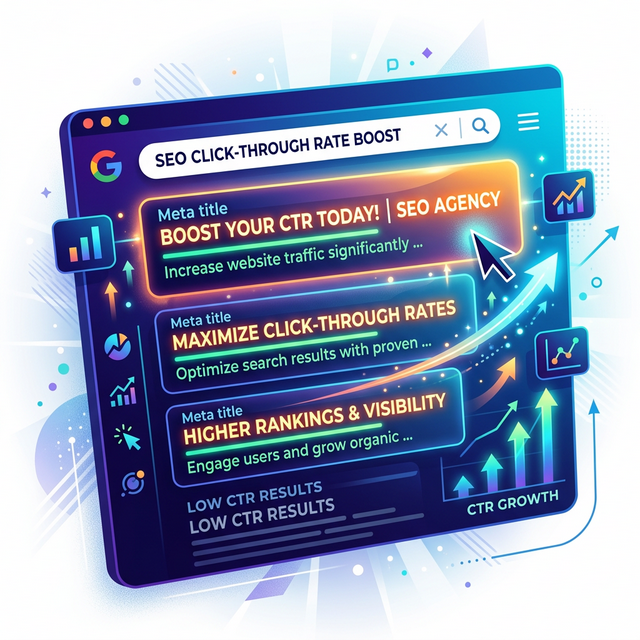
Every time a user enters a query into Google, Bing, or Yahoo, the search engine returns a list of results. Each organic result typically consists of three main elements:
- The URL or Breadcrumbs: Showing the user the path of the page.
- The Meta Title: The large, clickable blue link.
- The Meta Description: The brief summary paragraph below the title.
While Google has stated that Meta Descriptions are not a direct ranking factor in their algorithm, they are an undeniable factor in Click-Through Rate (CTR). And paradoxically, a higher CTR strongly signals to Google that your page is highly relevant to the query, which can indirectly boost your rankings over time. Therefore, optimizing these tags is non-negotiable for serious SEO practitioners.
Crafting the Perfect Meta Title
Your Meta Title (Title Tag) is the most critical real estate you own on the SERP. It must balance SEO best practices with human psychology. Here is how to construct a title that wins clicks:
1. Keep it within the pixel limit
Search engines do not cut off titles based on a strict character count; they cut them off based on a pixel width (typically around 600 pixels on desktop). If your title contains a lot of wide letters like "W" or "M", it will be truncated sooner than a title with thin letters like "i" or "l". As a general rule of thumb, keep your title between 50 and 60 characters. You can use our Meta Tag Extractor tool to analyze competitors and see exactly how long their titles are.
2. Front-load your primary keyword
Users scan search results quickly. By placing your main target keyword at the beginning of the title, you immediately confirm to the user that your page contains the exact information they are looking for.
3. Utilize emotional triggers and power words
Words like "Ultimate", "Proven", "Step-by-Step", "Fast", and "Free" dramatically alter the psychological impact of your title. Compare "How to Build a Website" with "The Ultimate Step-by-Step Guide to Building a Website Fast". The latter is far more compelling.
Mastering the Meta Description
If the title is the hook, the meta description is the sales pitch. You have approximately 155-160 characters (or 920 pixels) to convince the user that clicking your link is the best use of their time.
1. Answer the user's intent immediately
Do not waste the first 50 characters with filler text. Identify why the user searched for that query and immediately address their pain point. If they searched for "best running shoes for flat feet", your description should explicitly state that your guide reviews the top running shoes specifically designed for flat feet.
2. Include a clear Call-to-Action (CTA)
Tell the user exactly what to do next. Phrases like "Read our full review," "Download the free template," or "Learn more about our methodology" provide clear direction and subconsciously encourage the click.
3. Utilize Structured Data and Rich Snippets
While not strictly a "meta tag" in the traditional `
` sense, implementing Schema Markup can augment your SERP snippet with star ratings, product prices, or FAQ dropdowns, drastically increasing the physical size of your snippet and stealing attention away from competitors.The Danger of Keyword Stuffing
In the early 2000s, it was common practice to stuff keyword variants into the title and description ("Buy Shoes, Cheap Shoes, Running Shoes Online"). Today, search algorithms are incredibly sophisticated thanks to natural language processing models like BERT and MUM. Keyword stuffing looks spammy to users and can result in algorithmic penalties from Google. Write for humans first, and machines second.
How to Monitor and Test Your Tags
SEO is never truly "finished." You must constantly monitor your performance in Google Search Console (GSC). If you notice a page ranking well (e.g., Position 3) but suffering from an abysmal CTR (e.g., 1.5%), that is a massive red flag indicating that your Meta Title and Description are failing to resonate with the audience.
Use our Meta Extractor to pull the tags of the pages ranking above you. Analyze their wording, their emotional triggers, and their unique value propositions. Formulate a new title, update your page, and request indexing in GSC to see if your CTR improves over the next two weeks.
Conclusion
Your meta tags are the front door to your digital property. By meticulously crafting irresistible titles and persuasive descriptions within the strict pixel limits of modern search engines, you can siphon massive amounts of traffic away from your competitors without needing to climb a single ranking spot. Start auditing your tags today!