Imagine trying to stream a 4K movie on a 3G mobile data connection. The buffering would be unbearable. Yet, millions of webmasters still serve massive, uncompressed JPEG and PNG images to their mobile visitors every single day, crippling their site speed and destroying their Core Web Vitals scores in the process.
It is 2026, and serving legacy image formats is an amateur mistake. If you want a bleeding-edge, lightning-fast website, you must migrate to Next-Generation Image Formats.
What is WebP?
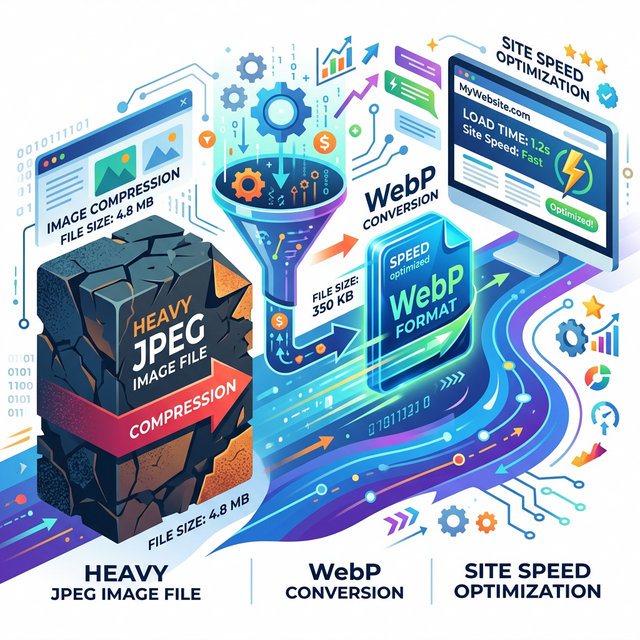
WebP is an image format developed specifically by Google to replace JPEGs, PNGs, and GIFs on the web. It provides superior lossless and lossy compression. According to Google's own data, WebP lossless images are 26% smaller in size compared to PNGs. WebP lossy images are 25-34% smaller than comparable JPEG images.
Smaller file sizes mean faster download times, quicker Largest Contentful Paint (LCP) scores, and significantly less bandwidth usage on your servers.
What is AVIF?
If WebP is the fast, reliable sports car, AVIF (AV1 Image File Format) is the hypercar. Developed by the Alliance for Open Media (which includes Google, Amazon, Netflix, and Apple), AVIF offers compression ratios that absolutely obliterate WebP. In many cases, it can reduce file sizes by an additional 50% over WebP while maintaining equal visual fidelity.
Why Does This Matter for SEO?
As discussed extensively, Google ranks pages based on their Core Web Vitals. The heavier your page, the slower it loads. Images generally make up over 50% of the total byte weight of a webpage. By running your assets through our Image SEO Extractor, you can immediately identify any heavy JPEG or PNG files dragging your site down.
How to Implement Next-Gen Formats
One of the long-standing fears of adopting WebP or AVIF was browser compatibility. However, as of today, virtually every modern browser (Chrome, Safari, Firefox, Edge) natively supports WebP, and nearly all support AVIF.
The safest way to implement these formats without breaking older browsers is to use the HTML <picture> element. This allows you to provide multiple sources, letting the browser choose the most optimized format it natively understands:
<picture>
  <source srcset="image.avif" type="image/avif">
  <source srcset="image.webp" type="image/webp">
  <img src="image.jpg" alt="A descriptive alt tag" loading="lazy">
</picture>
In this setup, a brand new iPhone with Safari might download the super-compressed AVIF. An older Android device might download the WebP, and a 15-year-old laptop running Internet Explorer 11 will simply fallback and download the heavy `.jpg`.
Conclusion
Migrating massive media libraries to next-gen formats may seem daunting, but countless CDNs (like Cloudflare) and CMS plugins now offer automatic, on-the-fly conversion. By adopting WebP and AVIF today, you dramatically slash your server bandwidth costs while providing a blazing-fast user experience that Google algorithms love to reward.