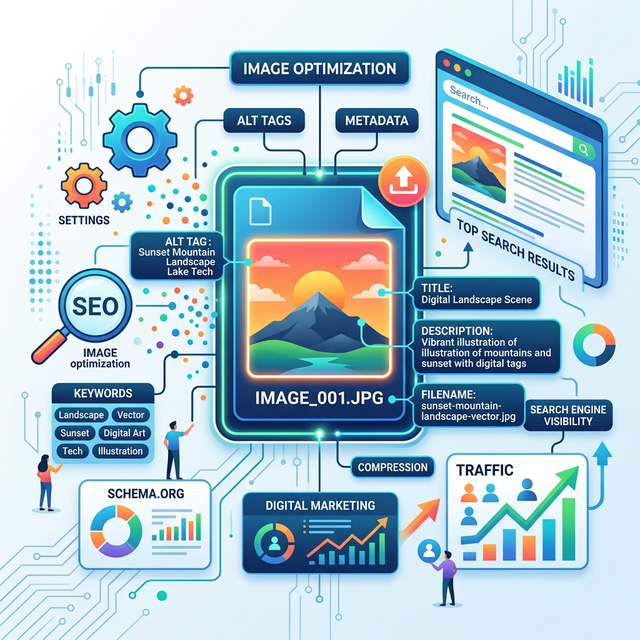
When marketers think of SEO, they usually focus primarily on textual content: the headings, the paragraphs, and the meta descriptions. However, there is a massive, untapped vertical of organic traffic just waiting to be claimed: Google Images.
Visual search makes up nearly 25% of all Google queries. If you run an e-commerce store, a recipe blog, or a travel website, ignoring image SEO means you are leaving money on the table. And the core foundation of Image SEO is the humble Alt Attribute.
What is an Alt Tag?
An `alt` attribute (often erroneously called an alt tag) is an HTML attribute specified in the <img> tag. Its primary purpose is describing the appearance and function of an image on a page. If the image fails to load due to a slow internet connection, the text written in the alt attribute will be displayed in its place.
More importantly, Alt Tags serve two massive structural purposes on the modern web.
Reason 1: Web Accessibility (ADA Compliance)
Search engines aside, the web was built to be accessible to everyone. Visually impaired users rely on screen readers (like JAWS or VoiceOver) to navigate the internet. When a screen reader encounters an image, it reads the Alt Text aloud to the user.
If your alt text is empty (`alt=""`), the screen reader might read the actual file name—which is often an ugly string of characters like "IMG_592384.JPG". This provides a terrible user experience. Writing clear, descriptive alt text ensures your website is accessible to all demographics, preventing potential ADA compliance lawsuits.
Reason 2: Context for Search Engine Crawlers
While Google uses advanced machine learning algorithms (like Cloud Vision API) to identify the contents of images, it still relies heavily on the text surrounding the image—and specifically the Alt Attribute—to confirm the context and rank the image in Google Images.
How to Write Perfect Alt Text
Writing good alt text is about striking a balance between descriptive accuracy and keyword relevance. Use our Image Optimizer Tool to run a page audit and uncover all images missing their Alt text.
- Be Specific and Descriptive: Instead of
alt="dog", writealt="Golden Retriever playing fetch in a sunny park". Provide contextual details. - Do Not Use "Image of" or "Picture of": Screen readers automatically announce that the element is an image. Writing "Image of a Golden Retriever" is redundant and wastes valuable characters.
- Include Keywords Naturally: If the target keyword for your page is "organic skincare routine," you can naturally include it if the image actually displays that:
alt="Applying an organic skincare routine face mask". However, never keyword stuff.alt="organic skincare routine, face mask, best skincare 2026, cheap cream"will actively hurt your SEO.
What If The Image is Just Decorative?
If an image is purely decorative (e.g., a background pattern, a colored line break, or a stylized icon) and provides absolutely no informational value to the user, you should leave the alt tag intentionally blank (`alt=""`). This instructs screen readers to skip the image entirely, keeping the auditory experience clean and focused on the real content.
Conclusion
Alt text remains an essential, yet surprisingly overlooked, component of technical SEO. By routinely auditing your media assets, writing descriptive, accessible labels, and utilizing targeted keywords naturally, you open a brand new funnel of highly-converting traffic through image search engines.