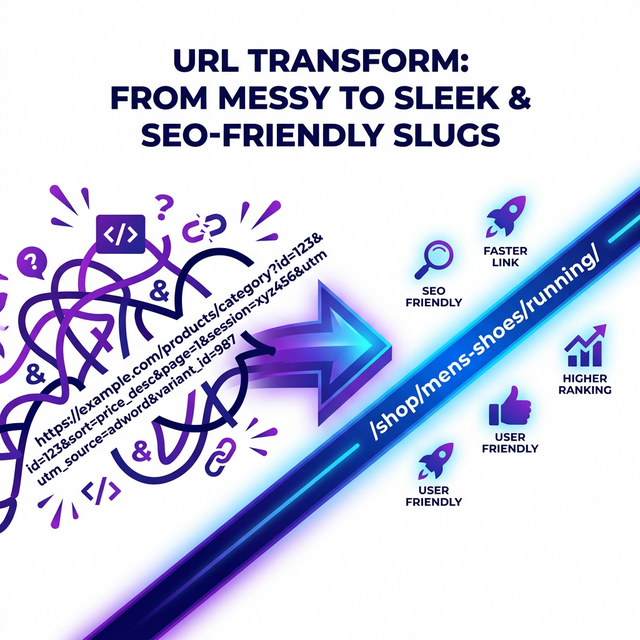
If you launch a new website today on a platform like WordPress and publish an article titled "The 15 Best Coffee Makers for Home Offices in 2026", the default URL generated will likely look something like this:
www.yoursite.com/the-15-best-coffee-makers-for-home-offices-in-2026/
While that is technically readable, it is an absolute nightmare for SEO. URL architecture is a foundational component of technical SEO, and mastering the art of the URL Slug is mandatory for top-tier rankings.
What is a URL Slug?
The slug is the exact portion of a URL that identifies a specific page on a website in an easy-to-read form. In the URL https://w3ranks.com/blog/what-is-seo, the slug is simply what-is-seo.
Why Do Slugs Matter for SEO?
Google uses your URL slug to understand the context of the page before it even reads the content. Furthermore, human users read the URL in the SERPs to gauge trust. A URL ending in /p=12345 looks spammy and untrustworthy, resulting in lower clicks. A URL ending in /best-coffee-makers looks authoritative.
The 5 Rules of Perfect URL Slugs
1. Keep it Incredibly Short
Shorter URLs rank better. Period. Industry studies show a direct correlation between top 10 rankings and URL length. Do not use your entire article title as the slug. If your title is "How to Bake the Ultimate Chocolate Cake at Home," your slug should simply be /chocolate-cake-recipe. Use a URL Slug Generator to rapidly condense long titles.
2. Include the Primary Keyword
Always include your exact target keyword. If you are targeting "vintage leather jackets," that phrase needs to be the slug: /vintage-leather-jackets.
3. Use Hyphens, Never Underscores
Google treats hyphens (-) as word separators, but it treats underscores (_) as word combiners. So, /best_coffee_maker is read by Google as the bizarre, singular word "bestcoffeemaker". Always use hyphens. A good slug generator will automatically strip bad characters and insert hyphens for you.
4. Remove Stop Words
Conjunctions and prepositions (and, or, but, for, the, a) add unnecessary length to your URL and dilute keyword density. Remove them entirely. Instead of /how-to-build-a-deck-in-the-winter, use /build-deck-winter.
5. Future-Proof the URL
Never include dates or years in your slug. If your slug is /best-laptops-2026, what happens in 2027? You will either have an outdated URL, or you will be forced to change the URL and set up a complex 301 redirect chain, risking a loss of link equity. Use /best-laptops as the slug, and simply update the Title Tag and H1 on the page itself each year.
Conclusion
A poorly constructed URL can handicap a great piece of content. Before you hit publish, run your title through an SEO Slug Generator to ensure it is perfectly formatted, hyphenated, and stripped of unnecessary bloat.